Bathroom · guide
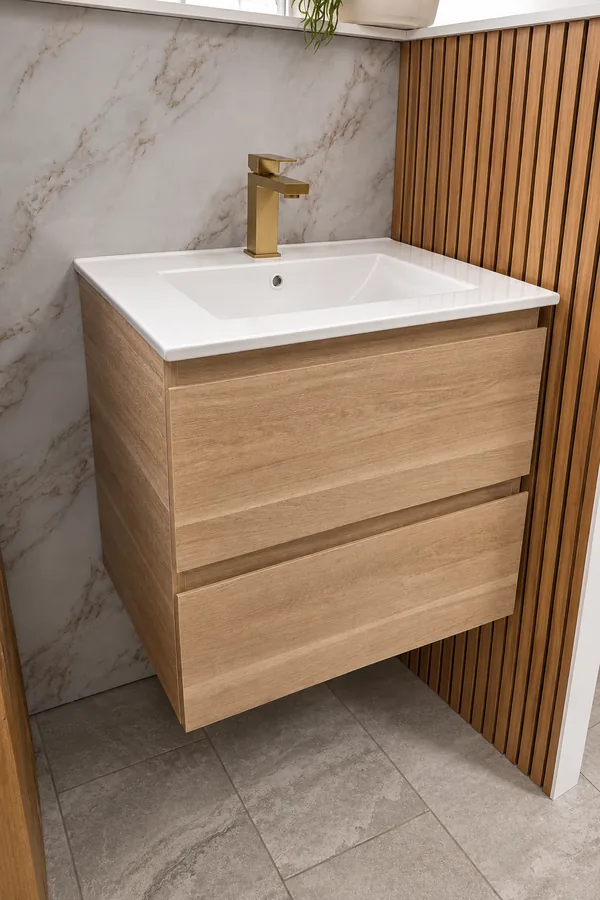
How to choose a floating vanity: size, height, plumbing and finish
What to measure before you come in, and which finishes hold up to humidity.
ReadCountertops · guide
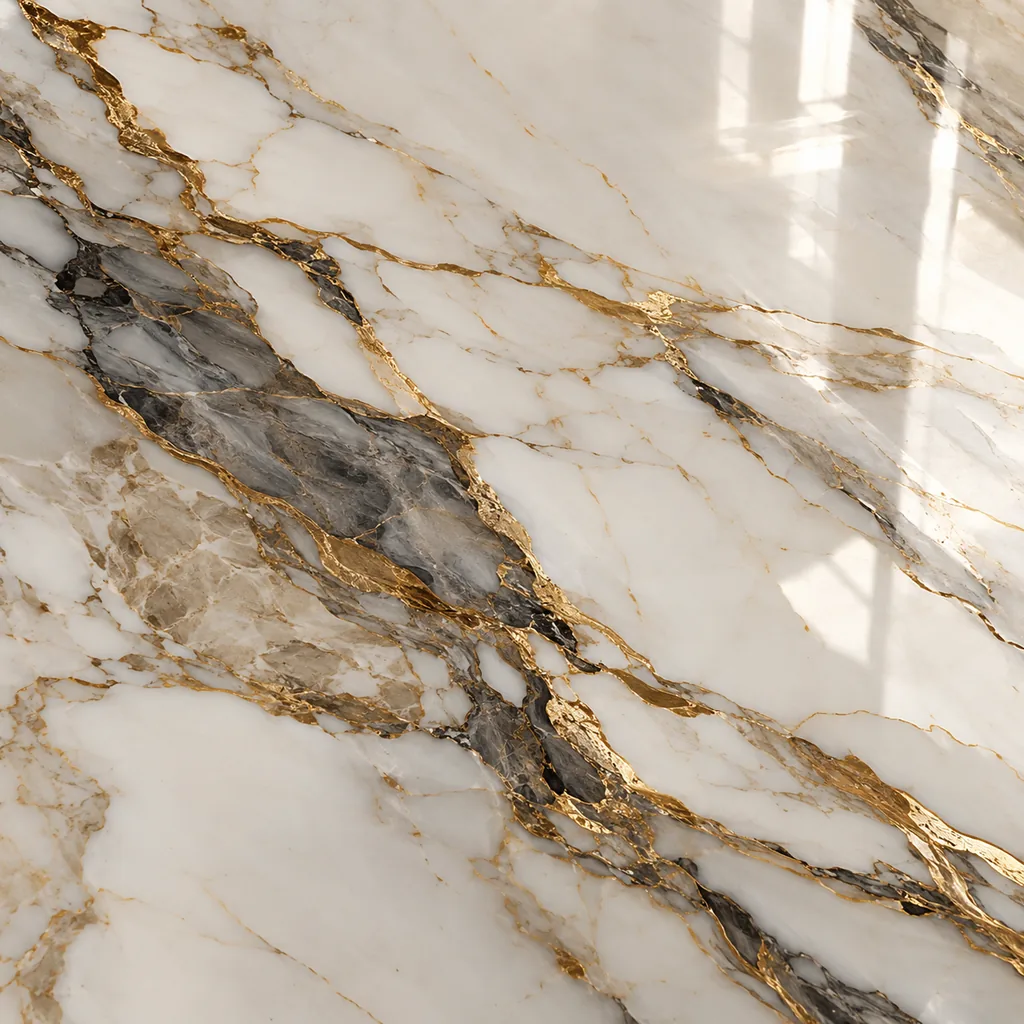
Quartz is engineered: crushed quartz mixed with resin and pigment, poured and cured into a slab. That resin binder gives quartz its glossy, uniform look — very consistent color, almost no natural variation unless the pattern is printed on. Porcelain and sintered-stone slabs are the opposite: clay and mineral powders, pressed under enormous force and fired at high temperature, the same family as porcelain tile but in slab form. The veining is printed with high-resolution ink or runs through the body of the slab, and the surface feels like stone rather than resin. If you have ever set a hot pan down without thinking, that difference is about to matter.
Porcelain is fired at temperatures far above anything a stove will produce, so a hot pan straight off the burner will not scorch it — it is genuinely heat-safe for everyday kitchen use. Quartz cannot make that claim. The resin binder can scorch, discolor or crack under sudden heat, which is why every quartz fabricator tells you to use a trivet. In a busy kitchen, that is one habit fewer to worry about with porcelain.
Southwest Florida kitchens do not always stay indoors. Porcelain does not fade or yellow under UV light, so it holds up on a covered outdoor kitchen island the same way it holds up inside. Quartz is not rated for long-term sun exposure — the resin yellows and can lose its shine over a few seasons outdoors. If any part of the countertop will live under a pergola or open patio roof, porcelain is built for that job; quartz is built for climate-controlled rooms.
Both materials are non-porous, so neither needs sealing, and both shrug off wine, oil, coffee and citrus if you wipe them within a reasonable time. This is a tie — the difference shows up in how they handle physical damage, not liquids.
Porcelain is harder than quartz on a mineral hardness scale, so it resists knife marks and everyday scuffing extremely well. Its weak point is impact on an edge — drop a cast-iron pan on a porcelain island edge and it can chip, and that is harder to blend back in than on quartz. Quartz is a little more forgiving of a hard knock, but it scratches more easily under a knife dragged directly on the surface (use a cutting board on either material). Neither is fragile in normal use; the trade-off is which failure mode you would rather avoid.
Porcelain slabs are typically installed at 12 mm — a thin, light profile that gets its finished look from a mitered edge, where two pieces are cut at 45 degrees and joined so the countertop reads as one thick slab from the front. Quartz is usually fabricated at 2 to 3 cm and does not need the mitered trick since the material is already thicker. On a long run or a large island, both materials need seams somewhere — ask where the fabricator plans to place them before the template is cut.
Because porcelain veining is printed at such high resolution, book-matching — mirroring the pattern across a seam so it reads as one continuous vein, like an open book — works on porcelain in a way it rarely does on quartz, where the pattern is usually more repetitive. For a dramatic waterfall island with veins that flow around the corner, ask specifically for a book-matched porcelain design and see the actual slabs before they are cut.
Porcelain slabs are large, thin and genuinely difficult to cut and polish correctly — the mitered edge takes real skill, and a fabricator used to quartz or granite may not have the tooling porcelain calls for. Two porcelain jobs with the identical slab can look completely different depending on who cut the edges. Ask any fabricator you are considering whether they work with porcelain regularly, and ask to see a finished mitered edge in person, not just a photo.
We do not publish prices because they move with size, finish and waste, but the general pattern is this: porcelain slab material itself often costs less per square foot than a premium quartz. Fabrication is where that can flip — cutting, mitering and installing porcelain correctly takes more time and specialized tooling, so labor can run higher. The total depends on both numbers together, which is why we ask for your layout and measurements before quoting either material.
| Porcelain / sintered slab | Quartz | |
|---|---|---|
| Heat | Handles a hot pan directly | Needs a trivet |
| Sun / outdoor | Safe under a covered outdoor kitchen | Yellows with long UV exposure |
| Stains | Non-porous, no sealing | Non-porous, no sealing |
| Scratches | Very resistant to knife marks | Scratches a little easier |
| Edge impact | Can chip on a hard hit | Slightly more forgiving |
| Typical thickness | 12 mm, mitered edge | 2–3 cm |
| Veining | Book-match possible | More uniform pattern |
Bring a photo of your kitchen or your cabinet color, and we will show you both materials side by side on the showroom floor before you decide.
What to measure before you come in, and which finishes hold up to humidity.
Read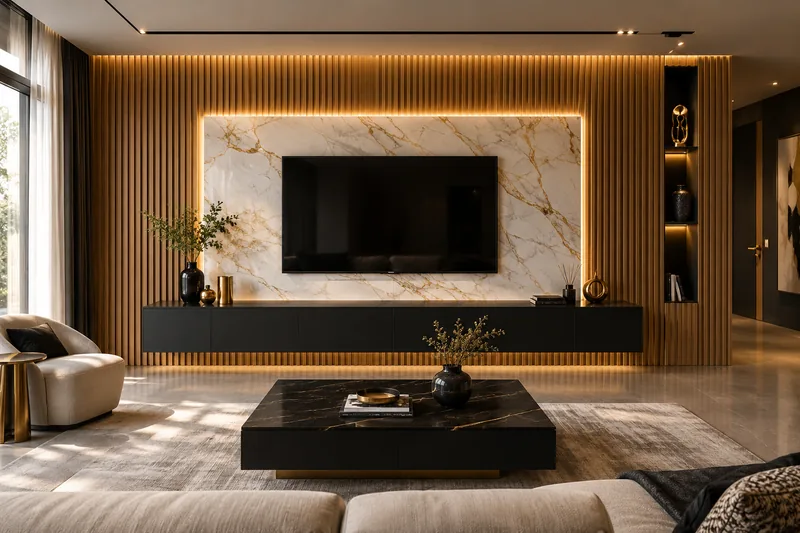
TV walls, headboards, ceilings and covered patios — plus the three mistakes we see most.
Read